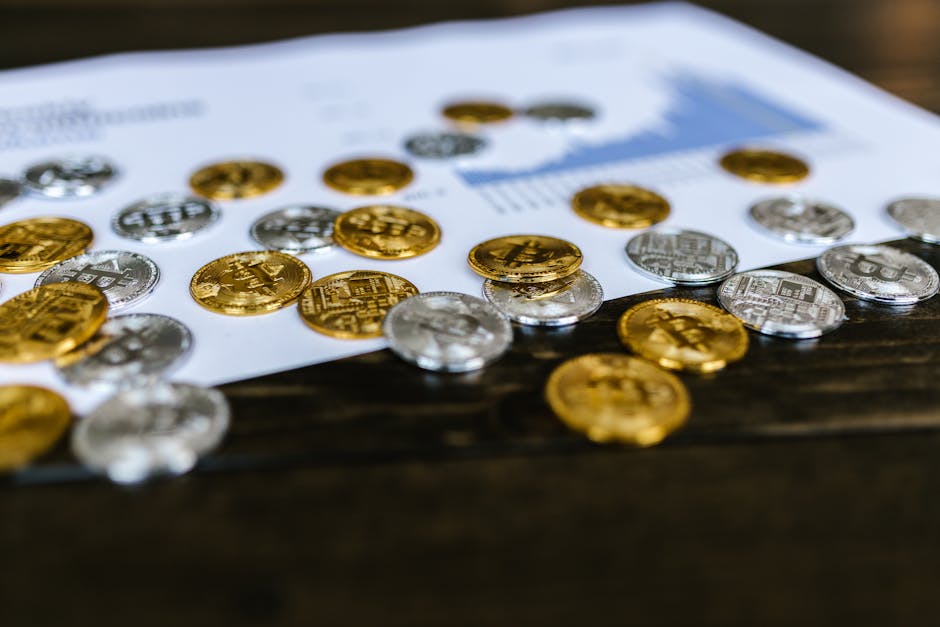
Gold and Silver Market Update (September 9, 2026)
Today's gold and silver prices have remained flat, with no significant changes in the live spot data. Gold is trading at $4398.60, while silver has stabilized at $566.56.
Technical Analysis: Gold (XAU)
From a technical perspective, gold's price action suggests a consolidation phase, as it oscillates within a narrow range of $4354.61 and $4442.59. The Relative Strength Index (RSI) is hovering around 50, indicating a neutral market sentiment.
Macro Analysis: Gold (XAU)
Gold prices are often influenced by inflationary expectations, interest rates, and central bank policies. Currently, the inflation rate has been steady, but some analysts predict a potential upward shift in the coming months. This could lead to increased demand for gold as a hedge against inflation.
However, rising yields on long-term government bonds may counteract this trend, making gold less attractive as a safe-haven asset. Central banks' monetary policies will also be crucial in determining gold's price direction. A hawkish tone from major central banks may weaken gold prices.
Risk appetite and USD strength are other key drivers of the gold market. A weakening USD can lead to higher gold prices due to increased demand from foreign investors. Conversely, a strengthening USD would make gold more expensive for holders of foreign currencies, potentially leading to decreased demand.
Trading Bias: Gold (XAU)
Given the current market conditions, we have a neutral short-term trading bias for gold, indicating neither strong buy nor sell signals. The price is stuck in a tight range, awaiting a catalyst to break through the consolidation phase.
Support levels: $4354.61
Resistance levels: $4442.59
Technical Analysis: Silver (XAG)
Silver's technical analysis reveals a similar consolidation pattern to gold, with prices oscillating between $560.89 and $572.23. The RSI for silver is also around 50, indicating a balanced market sentiment.
Macro Analysis: Silver (XAG)
Silver is often considered a proxy for economic growth and industrial demand. As such, it tends to be more sensitive to changes in inflation rates, interest rates, and central bank policies compared to gold. Rising inflation expectations could lead to increased demand for silver due to its role in various industrial applications.
However, the silver market may also be influenced by the overall metal market dynamics. If investors seek safe-haven assets during periods of economic uncertainty or high inflation, they might flock to gold over silver. Conversely, a weakening USD could boost demand for both metals.
Trading Bias: Silver (XAG)
Considering the current market environment, we have a slight sell bias for silver in the short term. The price has been stable, but if investors become risk-averse due to rising inflation or economic uncertainty, they may favor gold over silver.
Support levels: $560.89
Resistance levels: $572.23
Actionable Insights and Risk Management Reminders
Investors should remain cautious and prepared for potential market shifts. A neutral trading bias for gold suggests that prices are primed for a breakout in either direction. Silver's slight sell bias indicates that investors may prefer to hold onto their positions or wait for more compelling entry points.
To effectively manage risk, it is essential to set clear stop-loss levels based on the identified support and resistance levels. A disciplined approach to trading will help minimize potential losses while maximizing gains.
As always, stay informed about market developments, inflation expectations, yields, central bank policies, and global economic trends. This knowledge will enable you to adjust your investment strategy accordingly and capitalize on emerging opportunities.
In conclusion, a watchful eye on the gold and silver markets will be crucial in the coming weeks as investors navigate the complex interplay of drivers influencing prices. By staying vigilant and adapting to changing market conditions, investors can position themselves for success in this dynamic metal market landscape.
By Malik Abualzait
Comments
Post a Comment